
 Back to latest news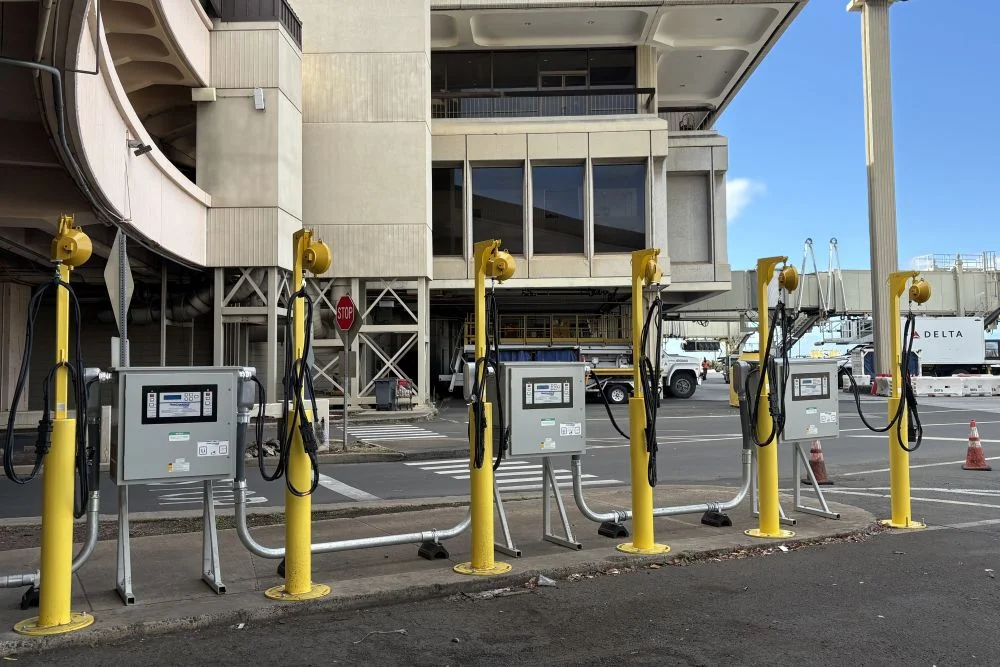
As airports transition to electric ground support equipment, charging strategy stops being a technical detail and becomes an operational decision. Choosing between fixed vs mobile GSE charging affects uptime, space planning, and how easily your fleet can grow.
Both approaches work. The wrong one, though, can lock you into infrastructure that slows operations or limits flexibility. Here’s how to think about the difference, and how we help teams choose the right setup.
What Is Fixed GSE Charging?
Fixed GSE charging stations are permanently installed systems located in designated parking or service areas. These stations deliver consistent power to equipment that returns to predictable locations at the end of each shift.
Fixed charging works well for high-volume operations where equipment parking is centralized and daily routines remain relatively unchanged. Once installed, fixed stations provide reliable access to power and support long-term electrification plans. The tradeoff is upfront planning and construction, with less flexibility if layouts change.
Many fleets pair fixed infrastructure with systems like PosiCharge charging or structured airport charging carts and stands to keep power organized and accessible.
What Is Mobile GSE Charging?
A mobile GSE charger brings power to the equipment instead of forcing the equipment to return to a charging location. Mobile charging uses portable airport charging carts that move across the airfield and connect wherever vehicles are parked.
This approach works well for airports with limited infrastructure, remote parking areas, or evolving layouts. Mobile charging reduces downtime by eliminating long trips back to fixed stations and allows teams to add charging capacity without construction.
Tools like the Ramp Runner charger give operations flexibility when fixed infrastructure isn’t practical, or when fleets are still growing.
Fixed vs Mobile GSE Charging — Key Differences
When comparing fixed vs mobile GSE charging, the real difference isn’t technology. It’s how your operation runs day to day.
Fixed charging supports centralized, predictable workflows and long-term efficiency. Mobile charging excels when flexibility, rapid deployment, or temporary coverage is needed. Many airports find that neither option alone covers every scenario.
That’s why hybrid strategies are common. Fixed stations handle base demand, while mobile charging fills gaps, supports overflow, or covers remote equipment locations using solutions like Ramp Runner alongside systems such as PosiCharge charging.
Which Charging Solution Is Right for Your Fleet?
The right airport GSE charging solutions depend on how your fleet actually operates, not how it looks on paper.
Smaller or expanding fleets often benefit from mobile charging because it scales without construction. Large fleets with stable layouts may prefer fixed stations for efficiency and organization. Space constraints, equipment movement, and future electrification plans all matter.
That’s why we don’t push a single model. We help you evaluate how equipment moves, where it parks, and how your fleet will grow, and then match charging solutions accordingly using tools like Ramp Runner, PosiCharge, and structured charger infrastructure.
Get the Right Fit for Your Fleet
Fixed and mobile GSE charging both play an important role in modern airport operations.
Choosing the right solution, or combination, improves uptime, reduces unnecessary costs, and keeps electrification plans flexible instead of restrictive.
Talk to an Averest expert to find the right charging solution for your GSE fleet.
Frequently Asked Questions
What is the difference between fixed and mobile GSE charging?
Fixed charging uses permanently installed charging stations in designated areas, while mobile charging uses portable carts that bring power directly to equipment wherever it’s parked.
When does fixed GSE charging make the most sense?
Fixed charging works best for large fleets with predictable parking locations and consistent daily operations where permanent infrastructure can be fully utilized.
When should an airport consider mobile GSE charging?
Mobile charging is ideal for airports with limited infrastructure, changing layouts, or fleets that need flexibility as electrification expands.
Can fixed and mobile charging be used together?
Yes. Many airports use a combination of fixed stations and mobile chargers to support different equipment types and operational needs.
Does mobile GSE charging reduce equipment downtime?
Yes. Mobile chargers allow equipment to be charged on-site, reducing travel time and keeping vehicles in service longer.
How does mobile charging support fleet growth?
Mobile charging scales easily, allowing fleets to add capacity without major construction or long lead times.
What types of equipment can be charged with mobile GSE chargers?
Mobile chargers support a wide range of electric ground support equipment, including tugs, belt loaders, and other airside vehicles.
Is fixed charging more cost-effective long term?
For large, centralized fleets with stable layouts, fixed charging can be cost-effective over time.
How do charging carts like Ramp Runner fit into airport operations?
Charging carts provide flexible, on-demand power and are especially useful for overflow charging or remote parking locations.
How do I decide which GSE charging solution is right for my operation?
The best approach depends on fleet size, layout, equipment usage, and future plans. Reviewing daily operations is the fastest way to identify the right mix.


