
eGSE Battery Solutions for Ground Support Equipment
Powering eGSE is about uptime on the ramp, predictable turns, and fewer surprises across the day. We help you choose battery and charging setups that match how your fleet truly runs.
eGSE Battery Solutions for Ground Support Equipment
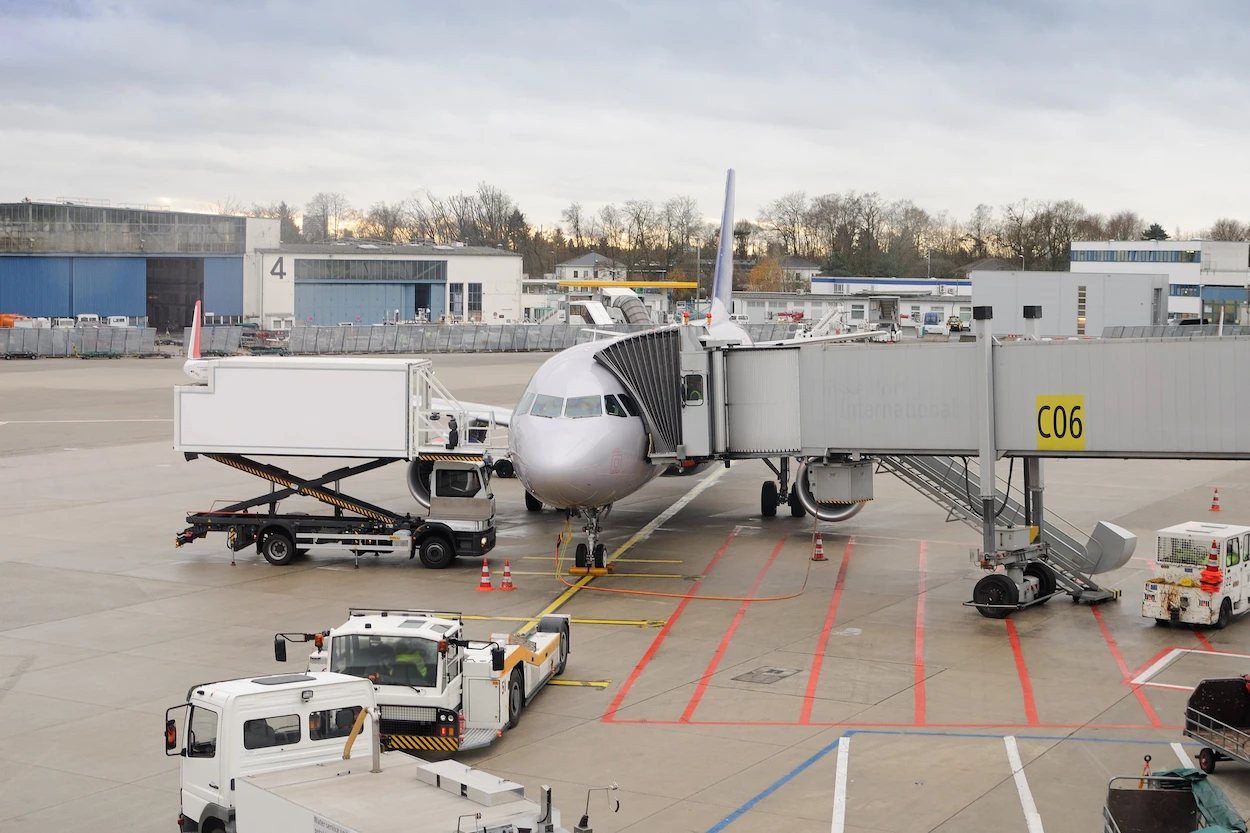
Battery Technology Options for eGSE
Different duty cycles call for different battery approaches. Some fleets need fast recovery between turns, while others prioritize simple, predictable shift-based charging. We’ll help you match the right battery technology to your equipment, charging access, and growth plan.
Our Products
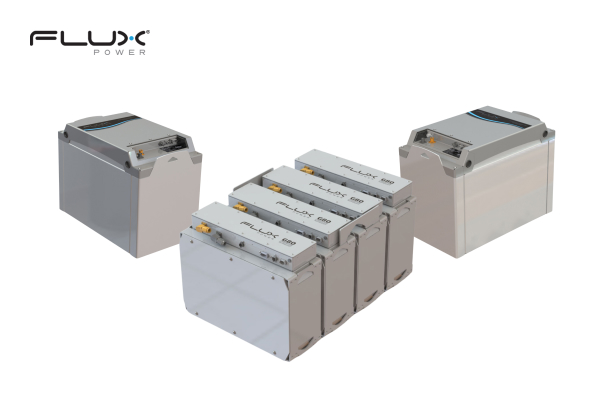
Lithium-Ion eGSE Batteries
Lithium-ion is a strong fit for high-utilization fleets that can’t afford long charge cycles or battery swaps. Opportunity charging helps you keep equipment in rotation without building your day around the battery room. If you’re pushing uptime, lithium-ion also reduces routine upkeep and keeps performance more consistent across the shift.
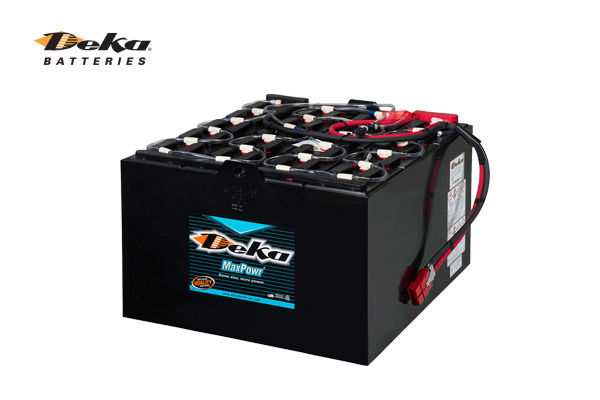
Lead-Acid GSE Batteries
Lead-acid remains a practical option for fleets with predictable routes, steady duty cycles, and established charging routines. It’s often the right call when your operation has dedicated charging time and existing infrastructure already dialed in. The tradeoff is more hands-on maintenance and longer charge windows that require planning.
Battery Solutions Across Core Ground Support Equipment Applications
Each type of electrical ground support equipment has different operating patterns, parking locations, runtime demands, and charging needs. That’s why the right battery depends on how the equipment is used, where it sits between turns, and how much charging access is available nearby. We’ll help you build a battery strategy around your operation—not force your operation to work around the battery.
Battery Solutions Across Core Ground Support Equipment Applications
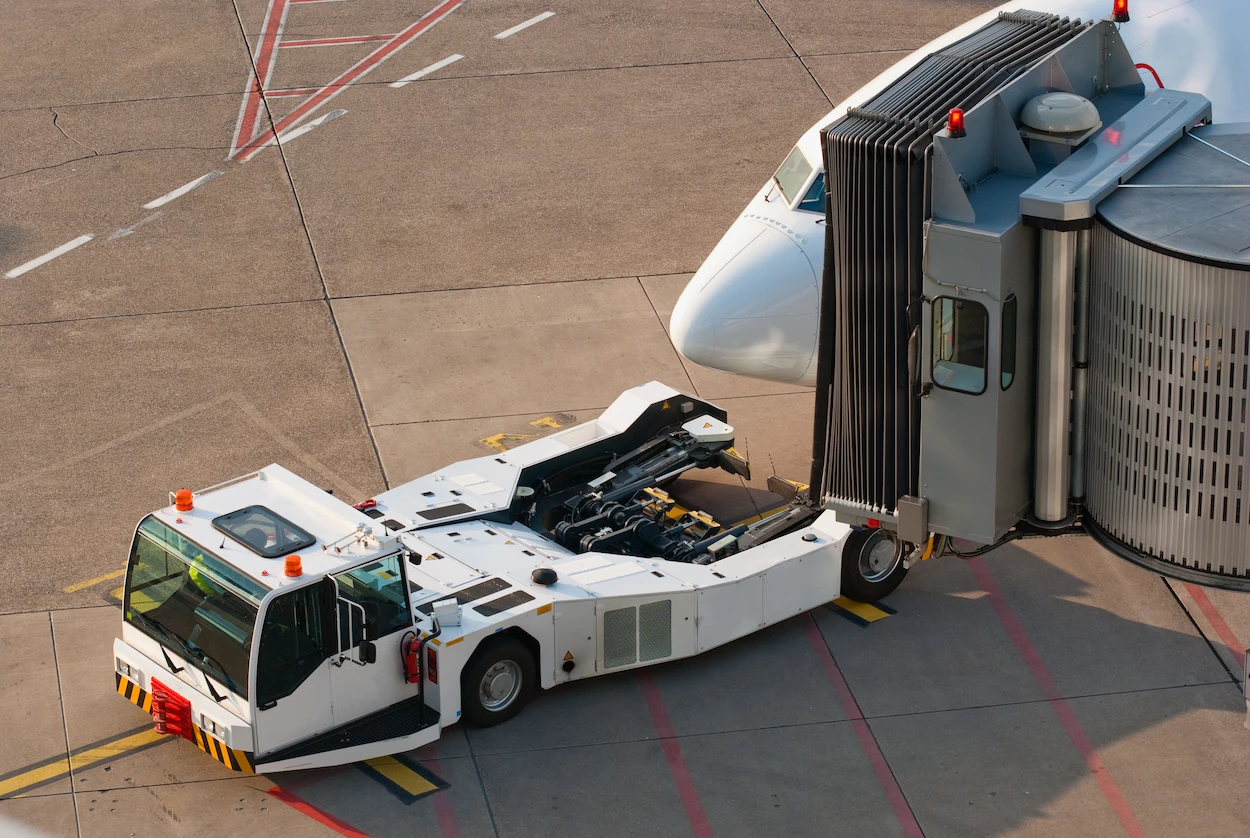
Every eGSE category moves differently, parks differently, and charges differently. That’s why the “best” battery depends on runtime demands, where the unit sits between turns, and how much charging access you have near the work. We’ll help you build a battery strategy that supports your operation, not the other way around.
Common eGSE Use-Cases We Power
- Pushback tractors: High-load work and tight turnaround windows often favor batteries that hold consistent power and can recover charge quickly when parked. If charging access is limited, sizing and strategy matter even more.
- Belt loaders: Frequent short cycles make opportunity charging a real advantage, but the best option still depends on where the equipment sits between gates and how disciplined charging can be.
- Baggage tugs: These run constantly and don’t always park in the same place, so battery choice depends on how often you can charge on the move versus returning to a fixed area.
- GPUs: Stationary patterns can support predictable charging routines, but power selection still depends on utilization levels and how much downtime you can tolerate.
- Catering trucks: Route timing and staging locations drive the decision, especially when you need reliability across multiple turns without pulling assets out of service.
Compare Lithium-Ion vs. Lead-Acid for eGSE Fleets
Here’s a quick side-by-side view of how lithium-ion eGSE batteries compare to lead-acid GSE batteries across cost, charging, maintenance, and operational impact. Use it to narrow options, then talk with us to validate fit for your fleet.
| Features | Lithium-Ion eGSE Batteries | Lead-Acid GSE Batteries |
|---|---|---|
| Upfront Investment | Higher initial cost | Lower initial cost |
| Total Cost of Ownership | Often lower over lifecycle due to reduced maintenance and longer lifespan | Competitive when maintenance is properly managed |
| Charging Approach | Opportunity charging supported; faster recharge times | Typically requires full shift charging cycles |
| Charging Speed | Faster recharge capability | Slower recharge compared to lithium |
| Maintenance Requirements | Minimal routine maintenance | Requires watering and regular maintenance |
| Lifecycle Performance | Longer cycle life | Shorter lifecycle compared to lithium |
| Downtime Impact | Reduced downtime due to rapid charging | Dependent on charging schedule and battery rotation |
| Infrastructure Needs | May require upgraded charging systems | Compatible with traditional charging infrastructure |
| Best Fit For | High-utilization fleets, 24/7 operations | Predictable shift-based operations |
| Sustainability Impact | Supports emissions reduction and electrification initiatives | Electrification support with established recycling systems |
Need help choosing the right battery solution? Request a battery consultation.
Sustainable Power Solutions for Airports

Fleet Electrification Planning
We help you move from pilot units to scaled deployment without creating charging bottlenecks that slow down gate ops.
Flexible Charging Support
From fixed layouts to changing ramp needs, we help you blend charging approaches so you’re not locked into a single model.
Right-Fit Battery & Charging Strategy
Battery choice is only half the equation. We align batteries with where equipment parks, how long it sits, and how your team actually charges.
Visibility & Control
Operational confidence goes up when you can track battery health and performance trends instead of guessing and reacting.
Why Choose Averest for eGSE Battery Solutions
We focus on airport ground operations, so our recommendations stay practical. You get an eGSE battery strategy that supports uptime today and scales cleanly as your fleet electrifies.
- Right-fit recommendations: We match battery technology to duty cycle, parking patterns, and charging access so that you avoid expensive misfits.
- Options for every fleet: Lithium-ion and lead-acid solutions let you align performance, cost, and infrastructure realities.
- Built for real operations: We think in turns, staging areas, and shift flow, not theoretical layouts.
- Long-term support: When issues pop up, you get a partner that stays engaged after installation.
Learn more about Averest and our approach to EGSE battery solutions.

Power Your Ramp With Confidence
The best battery solution is the one that keeps your equipment available when the operation needs it. If you’re deciding between lithium-ion and lead-acid, or mixing both, we’ll help you choose based on duty cycle, charging access, and total operational impact.
Frequently Asked Questions
Your questions are important to us. Can find what you’re looking for? We encourage you to contact us for additional inquiries.
Frequently Asked Questions
What are eGSE batteries and what equipment do they power?
eGSE batteries power electric ground support equipment used to service aircraft on the ramp and at the gate. That includes baggage tugs, belt loaders, pushback tractors, GPUs, and service vehicles like catering and maintenance units. The right battery keeps those assets available through turns without forcing downtime into your schedule.
What battery technologies are available for airport ground support equipment?
Most fleets choose between lithium-ion and lead-acid battery systems. Lithium-ion supports faster recharge and opportunity charging, while lead-acid often fits predictable shift-based operations with established routines. We help you choose based on duty cycle, charging access, and how your equipment actually moves.
When should an airport choose lithium-ion eGSE batteries?
Lithium-ion makes the most sense when uptime matters and equipment can’t sit for long charge cycles. It’s a strong fit for high-utilization fleets, multi-shift operations, and gates where opportunity charging is realistic. Lithium-ion battery technology can also help reduce battery swaps, maintenance labor, and downtime.
When does a lead-acid GSE battery make the most sense?
Lead-acid works well when operations are steady and charging is predictable. If your equipment returns to the same area, has dedicated charge windows, and you already have lead-acid infrastructure and maintenance routines in place, it can be a practical option. The key is planning for longer charge times and routine upkeep.
What is total cost of ownership for eGSE batteries?
Total cost of ownership includes more than the battery price. It covers lifespan, charging efficiency, maintenance labor, downtime, replacement frequency, and any infrastructure changes needed to support the fleet. The goal is to understand what the battery costs you over years of operation, not just on day one.
How does charging infrastructure affect battery performance?
Charging access and layout shape how well any battery system performs. If equipment can’t reach chargers when it needs them, you’ll see downtime, uneven battery health, and rushed charging behavior that shortens life. Good infrastructure matches where equipment parks, how long it sits, and how your team actually works the ramp.
What charging solutions support electric GSE fleets?
Most airports use a mix of fixed and mobile charging depending on layout and workflow. Fixed chargers work well for centralized parking and predictable routes, while mobile charging helps when equipment stages across multiple areas or operations change by gate. We help you choose the right mix so charging supports the operation instead of disrupting it.
Can existing ground support equipment be upgraded with new battery systems?
Yes, many fleets upgrade existing equipment with new battery systems, as long as the platform and electrical integration support it. The right approach depends on the equipment model, duty cycle, and what charging and power constraints you’re working with. We’ll help you evaluate whether retrofit or replacement makes more sense for each unit.
How do eGSE batteries support airport sustainability goals?
eGSE batteries enable electrification, which reduces ramp emissions and noise compared to diesel equipment. They also support more efficient operations by cutting idle time and minimizing maintenance waste tied to older systems. For many airports, battery strategy becomes a direct lever for meeting sustainability targets without sacrificing uptime.
How does Averest help determine the right eGSE battery solution?
We start with how your fleet runs: equipment types, duty cycles, staging locations, charging access, and growth plans. Then we recommend a battery and charging approach that fits the operation and avoids expensive misfits. You get a practical path forward that supports uptime now and scales as electrification expands.